



Company Profile
Shandong Synergy Tech Co., Ltd is a leading manufacturer of chemical materials, adsorbents, desiccants, and catalysts in Petroleum and petrochemical industry. Our company, founded in 2015, is situated in Zibo, Shandong, a renowned city for its classical heavy industries. We operate on a 30 mu area, with a registered capital of 16 million yuan and a dedicated team of 115 employees, including 6 senior engineers and 10 technical engineers.
At our company, we are committed to the development and production of the most advanced, reliable, and cost-effective materials, catalysts and adsorbents. We have successfully established partnerships with renowned international companies such as China National Petroleum Corporation, Sinopec, and Petrochemical Industry Companies from Germany, Britain, Kuwait, Saudi Arabia, Jordan, South Korea, New Zealand, Thailand, Indonesia, the Philippines, and other countries worldwide.
Why choose us?
High quality
Our products are manufactured or executed to very high standards, using the finest materials and manufacturing processes.
Professional team
Our professional team collaborate and communicate effectively with one another, and are committed to delivering high-quality results. They are capable of handling complex challenges and projects that require their specialized expertise and experience.
Long warranty
The long-term warranty is designed to give consumers more confidence that their purchases and services will continue to be valid.
Rich experience
Dedicated to strict quality control and attentive customer service, our experienced staff is always available to discuss your requirements and ensure complete customer satisfaction.

Zeolites are microporous, three-dimensional crystalline solids of aluminium silicate. Zeolites have small openings of fixed size in them, which allow small molecules to pass through them easily. But larger molecules cannot pass through them; that is why they are sometimes called molecular sieves.
Types of Zeolites
Zeolites are either formed naturally or can be synthesised or produced industrially. There are 50 different types of zeolites available nowadays.
Na2K2CaMg(AlO2)2(SiO2)2.6H2O (Erionite)
Na2Ca(AlO2)2(SiO2)4.6H2O (Gemelinite)
Hx[(AlO2)x(SiO2)96−x].16H2O (ZSM-5)
They are mostly found in volcanic and sedimentary rocks.
Examples:
Clinoptilolite (Clino) zeolite have silica to alumina ratio of 5 to 1 ratio.
Clino zeolite does not break down in the middle of an acid environment and is broadly used in the agricultural industry as a feed additive and soil amendment.
Na56(AlO2)56(SiO2)136.250H2O (Faujasite)
Synthetic zeolites are usually synthesised by the process of slow crystallisation of a silica-alumina gel in the presence of alkalis and organic templates. Interestingly, many different structures could be made using this process. Apart from variations in structures, zeolites can be manufactured or made from a variety of other atoms, making them chemically interesting and active. For instance, so-called heteroatoms include germanium, iron, gallium, boron, zinc, tin, and titanium.
Another important process used to carry out zeolite synthesis is sol-gel processing. Here, the properties of the product largely depend on several factors, such as the pH of the system, operating temperature, reaction mixture composition, pre-reaction seeding time, reaction time and the templates used. In this process, a few other elements (metals, metal oxides) can be easily incorporated. Generally, the silicalite sol produced by the hydrothermal method is very stable. This process for zeolite synthesis is usually preferred by many as it can be easily scaled up.
Several synthetic zeolites have been synthesised for a specific purpose, a well-known example is zeolite A, which is commonly used in laundry detergent. Synthesised zeolite will have a silica-to-alumina ratio of 1 to 1.
Example:
[Na12(AlO2)12(SiO2)12.27H2O]8 (Linde-A)
All zeolites are made up of the aluminosilicate framework, where silicon and aluminium are tetrahedrally coordinated. Silicon cation and aluminium cations are enclosed by four oxygen anions (O2-). The tetrahedral structure of Si04 and Al04 forms the building block of zeolite.
The zeolite formula is often given as follows:
Mx/n[AlO2]x.(SiO2)y.mH2O
However, zeolites tend to have different chemical elements in their composition. The formula for zeolite is given in the ratio where.
M = Any one metal that could be magnesium, sodium, potassium, lithium, or calcium.
N = Valence of the metal cation.
Y = Number of water molecules in the structure of the zeolite.
Y/x = Atomic Si/Al ratio.


The crystalline structure of zeolite is very different as compared to other crystalline solids. Zeolite can be considered as a special crystalline solid having a characteristic framework structure with cavities occupied by ions and water molecules that have considerable freedom of movement.
Properties of Zeolites
●Zeolites are very stable solids under different environmental conditions. The melting point of zeolite is very high, i.e., 1000oC.
●They are insoluble in water or other inorganic solvents.
●They do not undergo oxidation in the presence of air.
●The characteristic property of zeolite is its open cage-like framework structure that helps zeolite trap water and ions of potassium and calcium.
●The natural form of zeolite occurs in random forms, and pore sizes are not uniform, whereas synthetic zeolites are synthesised in a very precise manner with uniform pore sizes.
●Zeolites that are rich in alumina are attracted to polar molecules like water, whereas zeolites rich in silica are attracted towards nonpolar molecules.
●Since zeolites are not reactive and are obtained from naturally occurring minerals, they do not have any harmful environmental effects, although skin contact or inhalation may have a carcinogenic effect.
Application of Zeolites
Ion exchange
The cage-like structure of zeolites makes them very useful in the exchange of ions. For example, hard water is passed through a column filled with sodium-containing zeolites. In this process, calcium and magnesium get trapped by zeolites and sodium ions get released, which results in softening of water, making water rich in sodium. Nowadays, zeolites are also used in detergent for the removal of magnesium and calcium, thereby making the water softer and increasing the effectiveness of the detergent.
As catalyst
Zeolites are used as a catalyst in several important reactions such as cracking, isomerisation and hydrocarbon synthesis. The porous structure of zeolite makes it a highly effective catalyst. Moreover, pores in a particular zeolite are of fixed shape and size, making zeolite selective on certain molecules; therefore, zeolite is also referred to as shape-selective catalysis.
Adsorbent
Zeolites have a very high adsorbing capacity and are used to adsorb a variety of materials. They have a wide range of applications in the field of purification, drying and separation.
Separation of harmful substances
Zeolites can effectively remove radioactive particles from nuclear waste. It can also be used to clean water or soil contaminated with heavy toxic metals.
Zeolites are crystalline solids consisting of silicon, aluminium, and oxygen that form a framework with cavities and channels inside that can hold cations, water, and/or tiny molecules.
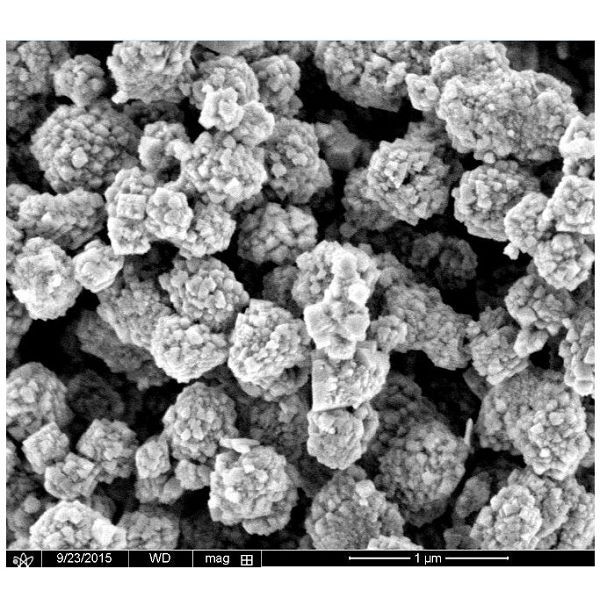
What Distinguishes Zeolites From Other Minerals
Zeolites are extremely stable solids that can withstand harsh environmental conditions that many other materials can’t. They are unaffected by high heat because they have relatively high melting points (above 1000oC) and do not burn.
They also withstand high pressures, do not dissolve in water or other inorganic solvents, and do not oxidise when exposed to air.
They aren’t thought to cause health problems through skin contact or inhalation, yet they may have carcinogenic (cancer-causing) properties in fibrous form.
They’re thought to have no negative environmental effects because they’re non-reactive and made from naturally available minerals. Although the fact that zeolites are stable and non-reactive may appear to be a drawback, this isn’t the case.
Zeolites are known for their open, cage-like “framework” structure and ability to trap other molecules inside them. Water molecules and alkali or alkaline-Earth metal ions (positively charged atoms with too few electrons, also known as cations) form a component of zeolite crystals in this way, however they don’t always stay there.
Zeolites can swap other positively charged ions for the metal ions trapped inside them (officially known as cation exchange), and they can easily gain or lose water molecules, as Cronstedt discovered over 250 years ago (this is called reversible dehydration).
Zeolites contain regular, fixed-size pores that allow small molecules to pass through but trap larger molecules; this is why they’re frequently called molecular sieves.
How to Maintain Zeolites
Regular cleaning
Zeolites can adsorb a wide range of substances, including impurities that could reduce their efficiency. Regular cleaning is necessary to remove these contaminants. This can be done by rinsing the zeolite with water or using specific cleaning agents depending on the type of zeolite and the nature of the impurities.
Desorption
To restore the zeolite's adsorption capacity, it may need to be desorbed periodically. Desorption involves heating the zeolite to release the adsorbed molecules. The temperature and duration of the desorption process depend on the zeolite's structure and the strength of adsorption.
Ph maintenance
The pH of the environment in which the zeolite is used can affect its performance. Some zeolites are stable only within certain pH ranges. It's important to monitor and maintain the pH within the recommended limits to prevent degradation of the zeolite structure.
Moisture control
While zeolites can adsorb moisture, excessive exposure to water can cause structural changes or degradation. If the zeolite is being used in a dry application, it should be kept dry when not in use. Conversely, if it's used in applications where it's exposed to moisture, such as drying processes, care must be taken to avoid sudden changes in humidity that could stress the material
Regeneration
For catalytic applications, zeolites often require regeneration after extended use. Regeneration typically involves burning off accumulated coke or other deposits at high temperatures. The specific conditions for regeneration will vary based on the zeolite type and the nature of the catalytic reactions.
Storage
When zeolites are not in use, they should be stored properly to prevent deactivation or contamination. They should be kept in airtight containers to protect them from moisture and environmental pollutants. The storage environment should also be stable, with controlled temperature and humidity levels.

Zeolite is an alkaline mineral that is very porous and is one of the very few minerals that is negatively charged by nature. Since most toxic elements such as mercury, lead and cadmium are positively charged, zeolite is pulled to these elements, like a magnet, and sucks them up into its structure. These dangerous substances become trapped in zeolite’s cage structure, and are then safely and gently carried out of the body.
Our Factory
Shandong Synergy Tech Co., Ltd is a leading manufacturer of chemical materials, adsorbents, desiccants, and catalysts in Petroleum and petrochemical industry. Our company, founded in 2015, is situated in Zibo, Shandong, a renowned city for its classical heavy industries. We operate on a 30 mu area, with a registered capital of 16 million yuan and a dedicated team of 115 employees, including 6 senior engineers and 10 technical engineers.


FAQ
We're professional zeolites manufacturers and suppliers in China. If you're going to buy high quality zeolites made in China, welcome to get more information from our factory.
ZSM 12, Beta zeolite for catalytic cracking, zeolite SAPO 11