





Company Profile
Shandong Synergy Tech Co., Ltd is a leading manufacturer of chemical materials, adsorbents, desiccants, and catalysts in Petroleum and petrochemical industry. Our company, founded in 2015, is situated in Zibo, Shandong, a renowned city for its classical heavy industries. We operate on a 30 mu area, with a registered capital of 16 million yuan and a dedicated team of 115 employees, including 6 senior engineers and 10 technical engineers.
At our company, we are committed to the development and production of the most advanced, reliable, and cost-effective materials, catalysts and adsorbents. We have successfully established partnerships with renowned international companies such as China National Petroleum Corporation, Sinopec, and Petrochemical Industry Companies from , Germany, Britain, Kuwait, Saudi Arabia, , , Jordan, South Korea, New Zealand, Thailand, Indonesia, the Philippines, and other countries worldwide.
Why choose us?
High quality
Our products are manufactured or executed to very high standards, using the finest materials and manufacturing processes.
Professional team
Our professional team collaborate and communicate effectively with one another, and are committed to delivering high-quality results. They are capable of handling complex challenges and projects that require their specialized expertise and experience.
Long warranty
The long-term warranty is designed to give consumers more confidence that their purchases and services will continue to be valid.
Rich experience
Dedicated to strict quality control and attentive customer service, our experienced staff is always available to discuss your requirements and ensure complete customer satisfaction.

Catalyst systems used for methanol synthesis are typically mixtures of copper, zinc oxide, alumina and magnesia. Recent advances have also yielded a possible new catalyst composed of carbon, nitrogen, and platinum.
What Are The Raw Materials For Methanol Production
Methanol Synthesis From Natural Gas
Natural gas is the main raw material for methanol production. The main component of natural gas is methane, and also contains small amounts of other alkanes, alkenes and nitrogen.
There are steam reforming, catalytic partial oxidation, non-catalytic partial oxidation and other methods to produce methanol feed gas from natural gas, among which steam reforming method is the most widely used, and it is carried out in a tube furnace under normal pressure or under pressure. Since the heat of reaction must be supplied from the outside to maintain the required conversion temperature, it is generally realized by burning some kind of fuel gas between the tubes, and the steam for conversion is directly produced on the device by the heat of flue gas and conversion gas.
Methanol Synthesis From Coal And Coke
Coal and coke are the main solid fuels for the production of crude raw material gas for methanol. The methanol production process from coal and coke includues fuel gasification, gas desulfurization, shift, decarbonization, methanol synthesis and refining.
The thermal processing of coal and coke with steam and oxygen (or air, oxygen-enriched air) is called solid fuel gasification.
Methanol Synthesis From Heavy Oil
Industrially, there are two main types of oil products used to produce methanol: one is naphtha, and the other is heavy oil. The fraction below 220°C obtained by crude oil distillation is called light oil, also known as naphtha. The methods of producing synthesis gas from naphtha include pressurized steam reforming, catalytic partial oxidation, and pressurized non-catalytic partial oxidation, batch catalytic conversion method, etc.
Co-Production Of Methanol And Ammonia
Methanol and ammonia co production is a purification process of synthetic gas, a new process developed to replace the copper ammonia liquid used in many synthetic ammonia productions in my country to remove trace carbon oxides.
The co production condition is to add a set of methanol synthesis device between the outlet of the fifth stage of the compressor and the inlet of the copper washing process, including methanol synthesis tower, circulation machine, water cooler, separator and crude methanol storage tank and other related equipment.
Increasing the pressure and lowering the temperature is conducive to the main reaction to produce methanol. In order to prevent equipment corrosion, the early synthesis method removes CO2 before the reaction. Later, it was found that CO2 can also be used as raw material, so it is not necessary to remove CO2 first.
The key to synthesizing methanol lies in the pressure. In the past, the high-pressure method was used, and the pressure was above 300 atmospheres. In 1966, the low-pressure method was developed, and the pressure was about 50 atmospheres. Later, the medium-pressure method was developed, and the pressure was about 200 atmospheres.

Different Methanol Synthesis Catalyst
|
Pressure (atm) |
Temperature(℃) |
Catalyst |
|
High pressure method |
300~600 320~380 |
Chromium zinc catalyst |
|
Medium pressure method |
105~300 225~270 |
Copper-zinc-chromium-aluminum catalyst |
|
Low pressure method |
40~60 200~300 |
Copper-zinc catalyst |
Innovative Methanol Synthesis Catalyst Shows Promise for Sustainable Energy Production
Various industries including automotive, construction, and pharmaceuticals. As a leading global supplier of catalysts, the company has been at the forefront of innovation in the development of high-performance catalysts for methanol synthesis.
With a strong commitment to research and development, the company has continuously invested in cutting-edge technologies and state-of-the-art facilities to enhance its product portfolio and meet the evolving needs of the market. The Methanol Synthesis Catalyst is a testament to the company's dedication to providing sustainable and efficient solutions for the production of methanol.
The Methanol Synthesis Catalyst is designed to offer high activity and selectivity, allowing for the efficient conversion of synthesis gas into methanol. Its unique composition and structure enable it to withstand the harsh operating conditions of methanol synthesis reactors, ensuring long-term performance and reliability.

The advantages of methanol
Methanol has several advantages as a carbon-neutral fuel. It can be produced using only renewable resources, such as sun, wind and biomass, along with carbon captured from power plants or taken directly from the air. And by adding water to the combustion process, Aabo points out (a real eureka moment for researchers at MAN Energy Solutions), methanol is able to meet the stringent emission limits of nitrogen oxide (NOX) Tier III regulation.
Moreover, with minor retrofits, methanol can be used with existing infrastructure. And compared to more conventional fuels, would drastically reduce carbon emissions anywhere from 65 to 95 percent, depending on how its produced.
Although the majority of methanol used today is still produced conventionally from natural gas, Aabo sees great potential for it to become a carbon-neutral resource for the maritime energy transition. “The infrastructure and engine technology are already in place; the task now is to develop its production from green hydrogen and carbon capturing.” While the production costs will initially be higher than other alternative fuels, such as synthetic natural gas (SNG), its handling costs will be lower.
Methanol can be handled and transported under normal temperatures and pressure, and it’s been a used for decades as a base chemical in many industries – which means that its storage, handling and properties are all known and documented. In fact, the only issues holding back its use, for example, as a fuel in cars, are toxicity and corrosiveness.
What is the best catalyst for methanol synthesis?
ZnO/Cr2O3 was used as the catalyst in the early days; while recently, Cu catalysts have been used for most commercial production of methanol from syngas. As the above reactions generate lot of heat, one challenge of the methanol synthesis is to remove the excess heat.
What factors should methanol synthesis plants consider when choosing catalysts?
Methanol synthesis plants need to consider catalyst activity, selectivity, stability, and production scale when choosing catalysts. The right catalyst should provide efficient catalytic activity under specific temperature and pressure conditions while ensuring the safety and stability of the production process. Factors such as reaction conditions (temperature, pressure), desired product purity, reaction rate, and specific process requirements also need to be taken into account when selecting catalysts. Different types of catalysts, such as copper-based or iron-based catalysts, are suitable for different process conditions.

Catalyst used in synthesis of methanol and preparation method thereof
The catalyst consists of oxides of copper, zinc and aluminum and titanium dioxide, wherein Al2O3 is a carrier; ZnO and TiO2 are used as cocatalysts; CuO is an active ingredient; and each ingredient has the flowing composition in percent by weight: 36-70 percent of CuO, 19-32 percent of ZnO, 5-15 percent of Al2O3 and 1-10 percent of TiO2, wherein the molar ratio of Cu to Zn is 2.0-3.0.
The method for preparing the catalyst used in synthesis of methanol is divided into two steps of:
Forming precipitate of aluminum by using a single-component precipitation method;
Forming coprecipitate of copper, zinc compound and titanium dioxide by using a coprecipitation method under an ultrasonic condition; and finally mixing the two obtained precipitates, aging, filtering, washing, drying and roasting to obtain the catalyst used in synthesis of methanol. The catalyst has the characteristics of good low-temperature activity, high thermal stability and high methanol selectivity.
High-efficiency methanol process technologies
Demand for methanol is driving producers to seek the greater yields and economies of scale that only larger plants can provide. As a result, 10,000 MTPD methanol plant layouts will likely soon be the new industry benchmark for large-scale production.
production plants combine advanced syngas generation and syngas-to-methanol processes with high-activity methanol production catalysts and comprehensive services. They are designed specifically to help you maximize yields and drive down costs.
The Catalyst for Methanol Synthesis
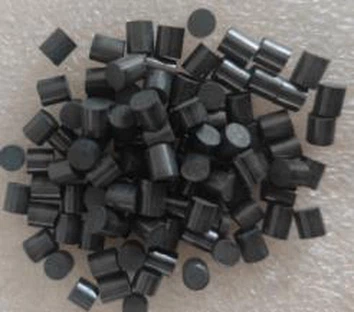
The catalyst of choice for industry is the CZA (Cu, ZnO, Al2O3) material. This is generally made by co-precipitation of the nitrates of the three cation components, using a base, usually sodium carbonate, at a temperature of ∼70 °C and with slightly alkaline conditions at the end of the procedure. It is then washed (e. g. to remove Na ions) and dried at ∼120 °C. At this stage the catalyst is light blue in colour, The catalyst is then dried in a rotary drier and calcined, usually to ∼350 °C after which it is black as the oxides are formed, The catalyst is then mixed with binders and lubricants (e. g. graphite) for extrusion to form cylindrical pellets of ∼5mm cross-section after firing. The catalyst can then be sold as is, or in a pre-reduced and passivated form. Like most metallic catalysts, the reduced material can be pyrophoric if not handled in the correct way. The catalyst is then fed into the reactor carefully and the plant start-up involves first slow reduction of the catalyst, under carefully temperature-controlled conditions, before finally running at temperature in the reacting gases.
Our Factory
Shandong Synergy Tech Co., Ltd is a leading manufacturer of chemical materials, adsorbents, desiccants, and catalysts in Petroleum and petrochemical industry. Our company, founded in 2015, is situated in Zibo, Shandong, a renowned city for its classical heavy industries. We operate on a 30 mu area, with a registered capital of 16 million yuan and a dedicated team of 115 employees, including 6 senior engineers and 10 technical engineers.


FAQ
We're professional methanol synthesis catalyst manufacturers and suppliers in China. If you're going to buy high quality methanol synthesis catalyst made in China, welcome to get more information from our factory.
KATALCOJM 71 6M, Johnson Matthey KATALCOJM 83 3M, Shift Catalyst