



Company Profile
Shandong Synergy Tech Co., Ltd is a leading manufacturer of chemical materials, adsorbents, desiccants, and catalysts in Petroleum and petrochemical industry. Our company, founded in 2015, is situated in Zibo, Shandong, a renowned city for its classical heavy industries. We operate on a 30 mu area, with a registered capital of 16 million yuan and a dedicated team of 115 employees, including 6 senior engineers and 10 technical engineers.
At our company, we are committed to the development and production of the most advanced, reliable, and cost-effective materials, catalysts and adsorbents. We have successfully established partnerships with renowned international companies such as China National Petroleum Corporation, Sinopec, and Petrochemical Industry Companies from , Germany, Britain, Kuwait, Saudi Arabia, , , Jordan, South Korea, New Zealand, Thailand, Indonesia, the Philippines, and other countries worldwide.
Why choose us?
High quality
Our products are manufactured or executed to very high standards, using the finest materials and manufacturing processes.
Professional team
Our professional team collaborate and communicate effectively with one another, and are committed to delivering high-quality results. They are capable of handling complex challenges and projects that require their specialized expertise and experience.
Long warranty
The long-term warranty is designed to give consumers more confidence that their purchases and services will continue to be valid.
Rich experience
Dedicated to strict quality control and attentive customer service, our experienced staff is always available to discuss your requirements and ensure complete customer satisfaction.
Deoxidize includes:Efficient Deoxidizer,Deoxidizer and Oxygen Removal Catalyst
What is Efficient Deoxidizer
An efficient deoxidizer is a substance or process that effectively removes oxygen from a liquid, typically molten metal, to prevent the formation of oxides and improve the quality of the final product. In metallurgy, particularly in the steelmaking process, efficient deoxidizers are critical for controlling the oxygen content in the steel, as even small amounts of oxygen can lead to the formation of defects such as inclusions and brittleness.
Benefits of Efficient Deoxidizer
Improved quality of metal products
By efficiently removing oxygen from the molten metal, deoxidizers help in preventing the formation of oxides and other inclusions. This results in a cleaner, more homogeneous metal with improved mechanical properties such as strength, ductility, and toughness.
Enhanced corrosion resistance
Oxygen is a common cause of corrosion in metals. By reducing oxygen content, efficient deoxidizers contribute to the creation of a more resistant material, which is especially important for products that will be exposed to harsh environments or need long-term durability.
Increased ductility
High oxygen contents can lead to brittleness in metals, making them less ductile. Deoxidation helps maintain a ductile structure, allowing the metal to be easily shaped and formed without cracking.
Cost savings
While the initial cost of using efficient deoxidizers may be higher, the reduction in scrap and rework due to improved metal quality can result in overall cost savings. Additionally, the extended life of equipment and reduced maintenance costs contribute to cost efficiencies.
Energy efficiency
A well-deoxidized melt requires less energy during subsequent processing steps like casting and rolling. This is because a more fluid and uniform melt flows more easily through the process, reducing energy consumption.
Environmental benefits
By reducing the amount of waste and improving the efficiency of metal production, efficient deoxidizers help minimize the environmental impact of the industry. This includes lower emissions of greenhouse gases and other pollutants.
Application of Efficient Deoxidizer
Recycling and utilization of industrial exhaust gas
The exhaust gas emitted from industrial production contains a large number of valuable components, but due to the presence of O2.
Now, it is easy to explode, causing technical problems for recycling. For example, in the chlorohydrin production process of propylene oxide, the exhaust gas contains about 50% propylene and propane, etc., with considerable recovery value. Deoxidizer can effectively remove residual oxygen in propylene and propane.
High purity gas and protective gas preparation
High-purity nitrogen requires the oxygen content in the gas to be less than 5 ppm, and the production of high-purity nitrogen from common nitrogen requires deoxygenation.
Under the action of deoxidizer, the oxygen content in high-purity nitrogen can be less than 0.1ppm. In terms of protective gas preparation, especially in shipping areas such as very large scale integrated circuits, laser materials, optical fibers and aerospace materials, the production process is required to be carried out in an ultra-clean environment system. For example, the semiconductor manufacturing process requires reducing the oxygen in the gas to 1 ppm or even lower, which requires Please use a suitable deoxidizer to remove oxygen to meet the requirements.
Syngas deoxygenation
The oxygen in the syngas reacts with the carbonylation product to form an acid that inhibits the carbonylation reaction. And oxidize the cocatalyst to form a non-catalytic complex, reducing the reaction effect. Ruding In the production process of octanol, in order to remove carbonyl iron and nickel carbonyl, artificial preparation is required in the front section. A certain amount of oxygen, but residual excess oxygen can easily lead to propylcarbonylation of precious metals in subsequent stages Catalyst deactivation. In order to protect the expensive precious metal catalyst, the oxygen content in the synthesis tower is required to be controlled below 1ppm, which requires deoxidation equipment to be installed in front of the synthesis tower.
Propylene deoxygenation and refining
Petrochemical polyethylene and polypropylene production requires oxygen content in the gas to be less than 0.1ppm.
Because trace amounts of oxygen will react with the catalyst, the catalyst activity will decrease. At the same time, it reacts with substances in the reaction system to generate resinous substances, which blocks the catalyst pores and pipes. Deoxidizers for olefinrefining require that side reactions such as olefin hydrogenation and oxidation cannot occur, which requires higher performance deoxidizers agent.
Catalyst filling and precautions
Before filling, clean the reactor and perform an air tightness test on the reactor. On the basis of ensuring that the height-to-diameter ratio of the loading layer is ≥3:1, it is recommended that: Relevant personnel must wear dustproof masks when loading, and the free fall height of the catalyst should be less than 0.5 meters. If the loading height more than 1 meter, it is recommended to first put the catalyst into a bottomless cloth bag and then send it into the reactor. The catalyst filling must be tight and even without channeling to ensure air flow and temperature distribution. Uniform and uniform bed resistance. After filling, clean air must be used to purge from the bottom of the reactor to remove the filling Powder is blown out due to impact and friction during the process.
Catalyst maintenance and storage
Frequent startup and shutdown will damage the life of the catalyst, so we should strive to avoid unnecessary shutdown; Reduce sulfur, chlorine, oil and other impurities in the raw gas as much as possible.
Replacement of deoxidizer
When the deoxidizer reaches the end of its service life, it needs to be replaced. When replacing, nitrogen should be used first.
Use gas or inert gas to replace the material in the bed, and then use nitrogen to add a certain amount of air to purge the bed, and gradually increase the amount of air until When all the added gas is air, the deoxidizer can be removed and replaced.
A efficient deoxidizer is a compound used in a reaction to remove oxygen. These products contain one or more elements that are scavengers for oxygen decreasing the presence of dissolved oxygen in molten metal. Efficient deoxidizer can remove oxygen and other unwanted gases such as hydrogen as well.

Deoxidizer belongs to the Mn based deoxidizer. Deoxidizer is mainly used to remove trace oxygen from liquid phase propylene in propylene industry production, and can also be used to remove trace oxygen from gases such as nitrogen, hydrogen, carbon monoxide, and ethylene.
●Complete oxygen removal can quickly reduce the oxygen concentration in the packaging bag to less than 0.01% in a short period of time.
●Maintain anaerobic state for a long time.
●It has a wide range of utilization effects and is effective against oxidation and discoloration.
●It can be used for both powder and liquid food.
●The taste of food will not change.
●It is separated from food and will not be taken into the body with food. It can be used with confidence and is very safe.
●Appropriate price, small size, easy to use and other features make it easy to popularize.
●It is easy to produce and can be produced in any size.
Types of Deoxidizer
Metallic deoxidizers
This method of deoxidization involves adding specific metals into the steel. These metals will react with the unwanted oxygen, forming a strong oxide that, compared to pure oxygen, will reduce the steel's strength and qualities by a lesser amount.
Vacuum deoxidation
Vacuum deoxidation is a method which involves using a vacuum to remove impurities. A portion of the carbon and oxygen in steel will react, forming carbon monoxide. CO gas will float up to the top of the liquid steel and be removed by a vacuum system.
Diffusion deoxidation
This method relies on the idea that deoxidation of slag will lead to the deoxidation of steel.
How Deoxidizer Works
Deoxidization is a method used in metallurgy to remove the oxygen content during steel manufacturing. In contrast, antioxidants are used for stabilization, such as in the storage of food. Deoxidation is important in the steelmaking process as oxygen is often detrimental to the quality of steel produced.
Material of Deoxidizer
There are three primary elements that manufacturers use as deoxidizers: manganese, silicone and aluminum. Occasionally they also use titanium or zirconium. Manganese, along with providing reliable deoxidizing capabilities, also increases strength in the completed weld.
An oxygen removal catalyst is a substance that accelerates the rate of chemical reactions involved in the removal of oxygen from a gas stream or a liquid. These catalysts are widely used in various industrial processes to achieve efficient oxygen removal, which is critical for maintaining product quality, preventing oxidation, and ensuring process safety.

Benefits of Oxygen Removal Catalyst
Enhanced reaction rates
Catalysts increase the rate of oxygen removal reactions without being consumed in the process, which means that the reactions proceed much faster than they would naturally.
Energy efficiency
By lowering the activation energy required for the reaction, catalysts allow the process to occur at lower temperatures and pressures, which can lead to substantial energy savings.
Process control
The use of catalysts enables better control over the oxygen removal process, which is essential for maintaining product quality and consistency.
Reduced emissions
In applications where excess oxygen can lead to harmful emissions, catalysts help in mitigating environmental impact by efficiently removing oxygen from gas streams before release.
Improved product quality
Eliminating oxygen can prevent the oxidation of products, which can lead to spoilage or degradation in quality. This is particularly important in industries such as food and pharmaceuticals.
Increased throughput
With faster reaction times and better control, processes utilizing oxygen removal catalysts can often handle larger volumes of material, increasing overall production throughput.
Safety improvements
In some processes, oxygen can pose a safety risk due to its flammability or reactivity. By removing oxygen, catalysts help to create a safer working environment.
Material flexibility
Catalysts can be tailored to work with a wide range of materials, making them adaptable to different industrial needs and processes.
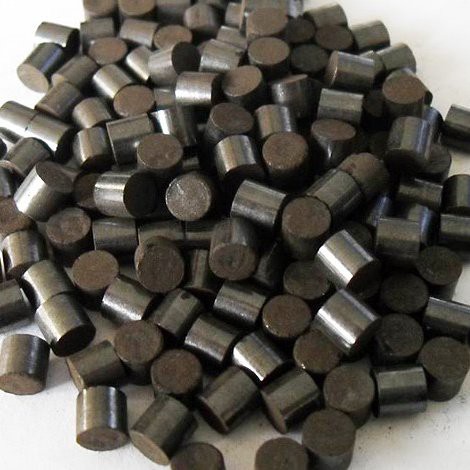
Oxygen Removal Catalyst Product Specifications
|
Composition |
65%-75% MnO + 5%-15% CuO |
|
Appearance |
Black extrudate |
|
Particle size |
Φ3-5 |
|
Bulk density, kg/L |
0.9-1.1 |
|
Crush Strength, N/particle |
≥70 |
|
Activation regeneration temperature/ ℃ |
180~4000 |
|
LHSV/ h -1 |
1-6 |
|
GHSV/ h -1 |
500-200 |
|
Deep deoxygenation degree, ppm |
≤0.1 |
|
Deoxygenation depth, ml/g |
≥10 |
|
Operating pressure, MPa |
Ordinary pressure-4.0 |
|
Operating temperature, ℃ |
-10-60 |
|
Inlet sulfur content, ppm |
<3 |
|
Inlet water content, ppm |
<30 |
|
Inlet Oxygen content, ppm |
<200 |
|
Outlet Oxygen content, ppm |
≤0.1 |
|
Bed height/tower diameter |
>4 |
The catalytic removal of oxygen from a natural gas stream is achieved by passing the gas at an elevated temperature over a catalyst bed where the oxygen reacts with a portion of the natural gas to form CO2 and water.
Generally, you should look for a catalyst that has high activity and selectivity for the desired product, as well as stability over time and under different conditions. Additionally, consider the cost and environmental impact of the catalyst when selecting one that is suitable for the scale of your reaction.
Our Factory
Shandong Synergy Tech Co., Ltd is a leading manufacturer of chemical materials, adsorbents, desiccants, and catalysts in Petroleum and petrochemical industry. Our company, founded in 2015, is situated in Zibo, Shandong, a renowned city for its classical heavy industries. We operate on a 30 mu area, with a registered capital of 16 million yuan and a dedicated team of 115 employees, including 6 senior engineers and 10 technical engineers.


FAQ
We're professional deoxidize manufacturers and suppliers in China. If you're going to buy high quality deoxidize made in China, welcome to get more information from our factory.
copper oxide deoxidizer, copper deoxidizer, Propylene adsorbent