





Company Profile
Shandong Synergy Tech Co., Ltd is a leading manufacturer of chemical materials, adsorbents, desiccants, and catalysts in Petroleum and petrochemical industry. Our company, founded in 2015, is situated in Zibo, Shandong, a renowned city for its classical heavy industries. We operate on a 30 mu area, with a registered capital of 16 million yuan and a dedicated team of 115 employees, including 6 senior engineers and 10 technical engineers.
At our company, we are committed to the development and production of the most advanced, reliable, and cost-effective materials, catalysts and adsorbents. We have successfully established partnerships with renowned international companies such as China National Petroleum Corporation, Sinopec, and Petrochemical Industry Companies from Germany, Britain, Kuwait, Saudi Arabia, Jordan, South Korea, New Zealand, Thailand, Indonesia, the Philippines, and other countries worldwide.
Why choose us?
High quality
Our products are manufactured or executed to very high standards, using the finest materials and manufacturing processes.
Professional team
Our professional team collaborate and communicate effectively with one another, and are committed to delivering high-quality results. They are capable of handling complex challenges and projects that require their specialized expertise and experience.
Long warranty
The long-term warranty is designed to give consumers more confidence that their purchases and services will continue to be valid.
Rich experience
Dedicated to strict quality control and attentive customer service, our experienced staff is always available to discuss your requirements and ensure complete customer satisfaction.
What is Aluminum Oxide Powder
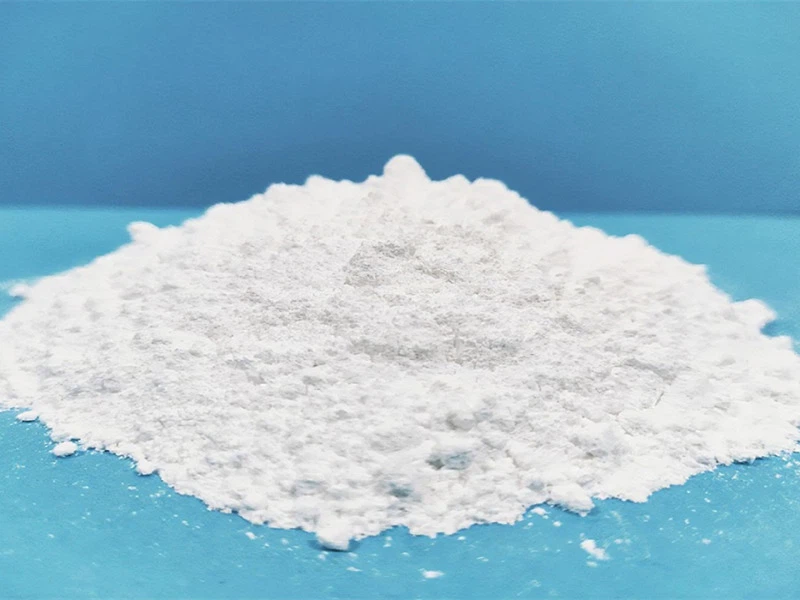
Aluminum oxide powder, also known as alumina, is a white crystalline compound composed of aluminum and oxygen atoms in a chemical formula of Al2O3. It is a naturally occurring mineral found in various forms, including bauxite, corundum, and sapphire. Alumina is known for its hardness, thermal stability, electrical insulation properties, and resistance to corrosion.
The powder form of alumina is produced through various processes including Bayer process extraction from bauxite ore, followed by calcination to remove impurities and convert it into anhydrous alumina. This powder can then be further processed to create different grades with specific properties tailored for various industrial applications.
Benefits of Aluminum Oxide Powder
High hardness
Aluminum oxide powder is extremely hard and durable, making it ideal for use in abrasive materials, cutting tools, and other applications where high levels of strength and wear resistance are required.
Thermal stability
It has excellent thermal properties and can maintain structural integrity at high temperatures, which makes it suitable for use in refractory materials for furnaces and kilns.
Electrical insulation
Aluminum oxide is an excellent insulator of electricity, making it useful in electrical components and systems.
Chemical resistance
It is resistant to most chemicals, which means it can be used in environments where corrosion could be an issue.
Lightweight
Despite its strength, aluminum oxide is relatively lightweight, which can reduce the weight of products and improve fuel efficiency in vehicles.
Recyclability
Aluminum oxide can be recycled and reused multiple times without losing its properties.
Transparency
It is transparent to ultraviolet light, making it useful in optics and certain types of lighting.
Biocompatibility
Aluminum oxide is considered safe for use in medical applications, such as in orthopedic implants and dental restorations.
High melting point
It has a high melting point, which allows it to be used in high-temperature applications.
Cost-effective
Aluminum oxide is relatively abundant and inexpensive compared to some other materials with similar properties
The most common form of alumina or aluminium oxide is known as corundum, which is in a crystalline form. In this, the oxygen ions tend to form a hexagonal close-packed structure. Meanwhile, the aluminium ions fill two-thirds of the octahedral interstices. Each Al3+ centre is octahedral.
Alternatively, alumina also exists in several different metastable phases, such as the cubic γ and η phases, the hexagonal χ phase, the orthorhombic κ phase, the monoclinic θ phase and the δ phase. Now, these can either be orthorhombic or tetragonal. Each phase will have a unique crystal structure and properties.
●Aluminum oxide powder possesses good or high thermal conductivity. At elevated temperatures, it can withstand alkali attacks and strong acids.
●It consists of excellent dielectric properties.
●Metallic aluminium is highly reactive with atmospheric oxygen.
●It exhibits high stiffness and strength.
●It is available at a purity range from 94%.
●It is insoluble in water.
●Aluminum oxide powder is an amphoteric substance, which means that it can react with both acids and bases.
●Activated alumina is a porous, granular substance.
●Aluminum oxide powder is an excellent ceramic oxide.
●Has high resistance to abrasion and chemical attacks.
●Wear resistance

Material of Aluminum Oxide Powder
Aluminum oxide powder consists primarily of aluminum (Al) and oxygen (O) atoms arranged in a crystalline structure. The chemical formula for this compound is Al2O3, indicating that each molecule contains two aluminum atoms bonded to three oxygen atoms. This stoichiometric ratio results in a stable oxide with a wide bandgap, contributing to its insulating properties.
The crystal structure of aluminum oxide is typically hexagonal in its pure form, known as alpha-alumina or corundum. This structure is highly ordered and responsible for the material's hardness. In addition to alpha-alumina, there are other less stable phases of aluminum oxide, such as gamma-alumina, which has a cubic structure and is more porous than alpha-alumina.
Application of Aluminum Oxide Powder
Abrasives
Aluminum oxide powder is a vital compound for a range of industrial abrasive materials used for shaping industrial components. Excellent hardness and superior strength allow aluminium oxide to be suitable for use in these applications and machines. Conversely, it can be used as coating for industrial products and machinery to protect them against abrasion.
Refractories
Due to its thermal capacity and high melting point, alumina powder is often used in refractory products, particularly when refractories need to retain their strength and other properties at high temperatures. The most common refractories using alumina in their composition can be found in petrochemical processing, cement production, waste incineration, iron and steelmaking.
Glass
Production of glass with increased durability and strength requires the addition of aluminium oxide. Alumina powder is a common component of shatterproof and bulletproof glass due to its high pressure resistance and excellent hardness. The potential of alumina has also been studied in creating a completely unbreakable glass.
Ceramics
Alumina is a crucial component of technical or advanced ceramics, also known as engineered ceramics. These products are intended for harsh applications requiring thermal stability, enhanced wear resistance, as well as other properties inherent to aluminium oxide. The purity of alumina used in ceramics can vary and go up to 99.9%, the highest purity resulting in the highest strength, corrosion and wear resistance.
Medical industry
Alumina features hardness and thermal stability, which are key properties for a number of biomedical applications. It’s crucial in the manufacturing of products such as prosthetic limbs, hip replacement bearings, tissue reinforcements, prosthetic eye substitutes, bionic implants, and dental implants. However, it’s also used for lab tools and equipment such as furnaces, crucibles, and other essential labware.
Electrical insulation
Aluminium oxide is an excellent electrical insulator, used for integrated circuits as a substrate. It is also used as a tunnel barrier in the fabrication of devices such as superconducting quantum interference devices and single-electron transistors. Aluminum is a dielectric material with a large band gap suitable for use in capacitors as an insulating barrier.
Protective and military equipment
Due to its lightweight qualities and exceptional strength, alumina is often usedt in the production of civilian and military protective equipment. Aircraft armor industry is one of the largest consumers of aluminium oxide, while other applications include the manufacturing of vehicle armor, body armor, ballistics for stationary objects and bulletproof windows.
Electronics
Aluminum powder is a crucial component in the production of microchips and other electronic equipment, featuring excellent thermal resistance, as well as a high boiling and melting point. It is also widely used in heat sink insulation. Due to its high conductivity, it’s mainly implemented in creating conductive pathways in electrical devices such as solar cells and light-emitting diodes.
Gem industry
Corundum is the crystalline form of alumina powder and it’s the base element of sapphires, rubies, emeralds, and other precious gems, depending on trace levels of contaminants such as chromium, iron, and titanium. Due to its excellent hardness, it’s used for polishing gems, including the most difficult ones with level 8 hardness.
Construction materials
Alumina is a chemically inert compound with high abrasion resistance, making it an ideal filler for bricks, plastics, and heavy clayware including kilns. It is also used as sandpaper in a wide range of construction-related applications. Aluminium oxide nanofibers are used to design cement-based composites of ultra high strength.
Wide industrial applications
Aluminium oxide can be used in a broad range of industrial applications from hydro cyclones to reducers, valves, nozzles, and piping components such as straight pipes, elbows, and tees. It is suitable for use in the production of cutting tools, machining tools, wear-resistant pump impellers, and thermocouple sheaths.
Catalysis
Alumina can catalyze a range of reactions used industrially. It is most common as a catalyst in refineries, in the Claus process, converting waste gasses of hydrogen sulfide into elemental sulfur, as well as to dehydrate alcohols to alkenes.
Process of Aluminum Oxide Powder
Aluminium oxide is often produced by the Bayer process, which means refining bauxite to produce alumina. The following reversible chemical equation describes the grounds of the Bayer process:
This process starts by drying crushed and washed bauxite, usually containing 30–55% Al2O3. The bauxite is dissolved in caustic soda to form a slurry, heated to temperatures of about 230–520 °F (110–270 °C). This mixture is then filtered to remove the residue called the “red mud” impurities.
The filtered alumina solution (aluminium hydroxide) is then transferred or pumped into precipitator tanks where it cools and starts to seed. These seeds stimulate a precipitation process allowing solid aluminium hydroxide crystals to be formed. All the aluminium hydroxide that settles at the bottom of the tank is removed.
The remaining caustic soda is washed away from aluminium hydroxide, which undergoes various levels of filtering. Finally, it is heated to completely remove excess water. After passing through a cooling stage, the fine white powder is produced.
Reactions of Aluminum Oxide Powder
The reaction of alumina with sodium hydroxide results in the production of sodium aluminate (salt) and water. This reaction occurs at temperatures between 900-1100°C. Here, aluminium oxide acts as an acid.
Al2O3 + 2NaOH → 2NaAlO2 + H2O
Alumina reacts with heated dilute hydrochloric acid to produce an aluminium chloride solution. In this case, alumina, since it contains oxide ions, reacts with acids in the same way magnesium or sodium oxides do.
Al2O3 + 6HCl → 2AlCl3+ 3H2O
One of the properties of aluminium oxide is that it is an amphoteric oxide. What it means is that it can act both as an acid and base. Interestingly, during its reaction with sulphuric acid, alumina acts as a base. This is basically a form of a neutralization reaction.
Al2O3 + H2SO4 → Al2(SO4)3 + H2O
How to Maintain Aluminum Oxide Powder
Storage conditions
Store the powder in a cool, dry place, away from direct sunlight and moisture. Humidity can cause caking or alter the material properties. Use sealed containers to prevent airborne contaminants from settling on the powder.
Container integrity
Ensure that the storage containers are clean and made of materials that do not react with aluminum oxide. Containers should be non-reactive and impermeable to prevent any chemical interaction that might degrade the powder.
Handling precautions
When handling the powder, use appropriate personal protective equipment (PPE), such as gloves, lab coats, and safety goggles, to avoid skin contact and inhalation. Aluminum oxide dust can be harmful if ingested or inhaled.
Preventing cross-contamination
Avoid mixing aluminum oxide powder with other substances that could lead to cross-contamination. Always use clean tools and equipment when scooping or transferring the powder.
Regular inspection
Regularly inspect stored containers for signs of damage, leaks, or contamination. If any issues are detected, they should be addressed immediately to prevent degradation of the powder.
Proper labeling
Clearly label containers with the contents and date of storage. Proper labeling helps in tracking the age of the powder and ensures that it is not mistakenly used past its optimal shelf life.
Disposal protocols
Establish proper disposal protocols for aluminum oxide powder that is no longer usable or has expired. Consult local regulations regarding waste disposal to handle the material safely and responsibly.
Temperature control
While aluminum oxide is stable under normal conditions, extreme temperatures should be avoided as they could potentially change the physical or chemical properties of the powder.
Our Factory
Shandong Synergy Tech Co., Ltd is a leading manufacturer of chemical materials, adsorbents, desiccants, and catalysts in Petroleum and petrochemical industry. Our company, founded in 2015, is situated in Zibo, Shandong, a renowned city for its classical heavy industries. We operate on a 30 mu area, with a registered capital of 16 million yuan and a dedicated team of 115 employees, including 6 senior engineers and 10 technical engineers.


FAQ
We're professional aluminum oxide powder manufacturers and suppliers in China. If you're going to buy high quality aluminum oxide powder made in China, welcome to get more information from our factory.
High Purity Alumina, Pseudo Boehmite, Fine powder of Low sodium a calcined Alumina